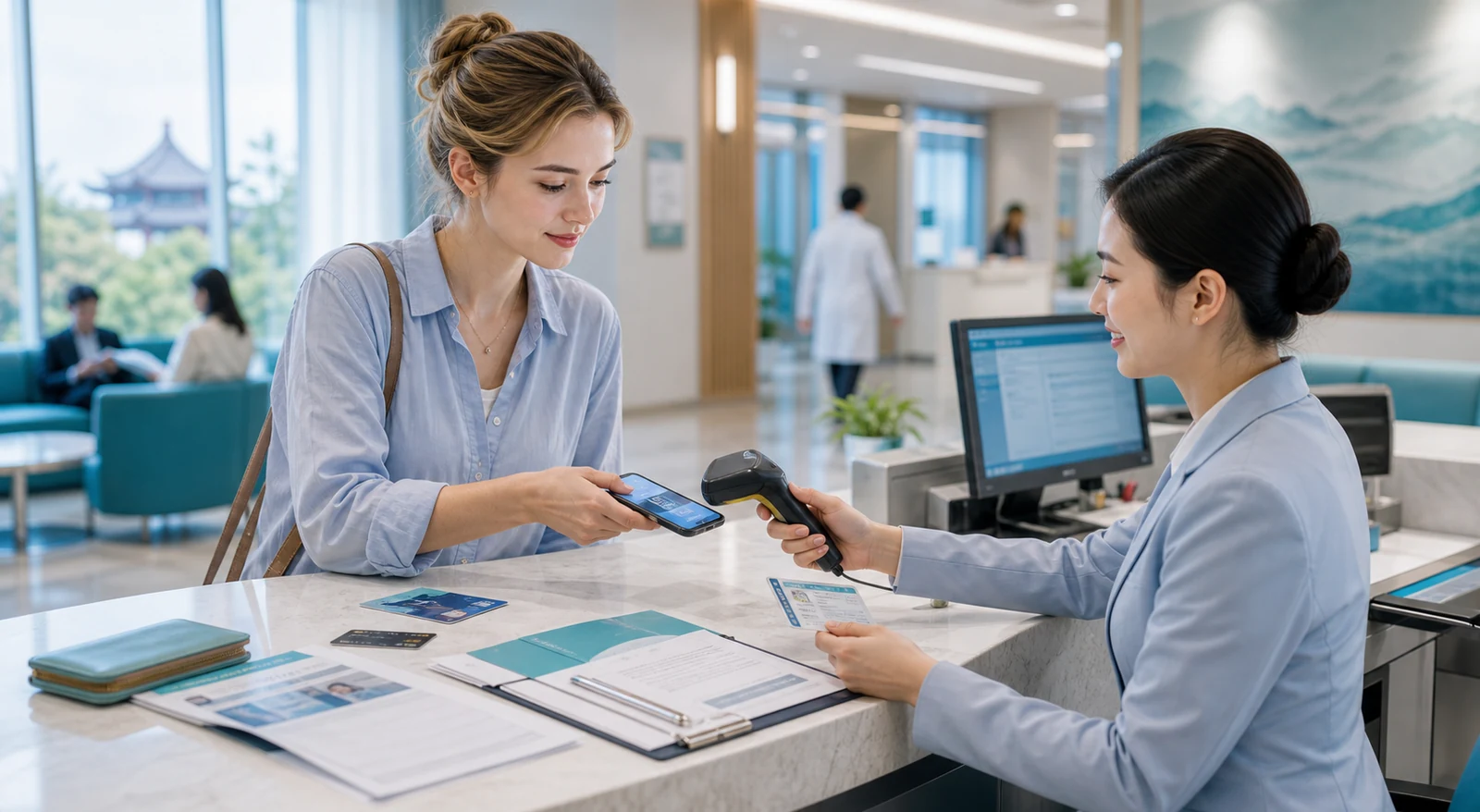
Paying at a hospital in China is usually straightforward once you know the sequence. In most cases, you pay at several points during the visit rather than receiving one final bill at the end.
You may need to pay for:
Registration
Doctor consultation
Blood tests or imaging
Procedures
Medicines from the hospital pharmacy
Admission deposit if you are hospitalized
Public hospitals, private hospitals, and international departments do not always use the same payment flow, so check the hospital's official channel before you go.
In large cities, many hospitals and clinics can accept mobile payment. Some international departments and private hospitals also accept major foreign cards. Do not assume this is universal, especially at public hospitals outside major city centers.
If you plan to rely on a foreign bank card, confirm with the hospital in advance. A card that works at hotels or malls may still fail at a hospital cashier or self-service machine.
At a standard public hospital, the process is often more fragmented. You may move between registration counters, doctor rooms, payment counters, test departments, and the pharmacy.
At an international department or private hospital, the process is usually simpler. Staff may help you coordinate appointments, billing, and follow-up in English. The tradeoff is price. International services are often more expensive than standard public outpatient care.
Go to the manual cashier counter instead of the self-service machine
Ask whether cash payment is accepted
Call your insurer if cashless service was expected
Ask whether a family member or companion can pay locally
Keep the registration slip and unpaid order details while resolving the issue
Do not wait until after the consultation to think about payment. In many hospitals, treatment, testing, or medicine pickup will stop until the order is paid.